Some things take time to digest: a meal, a loss, the distance between what we hoped for and what we received.
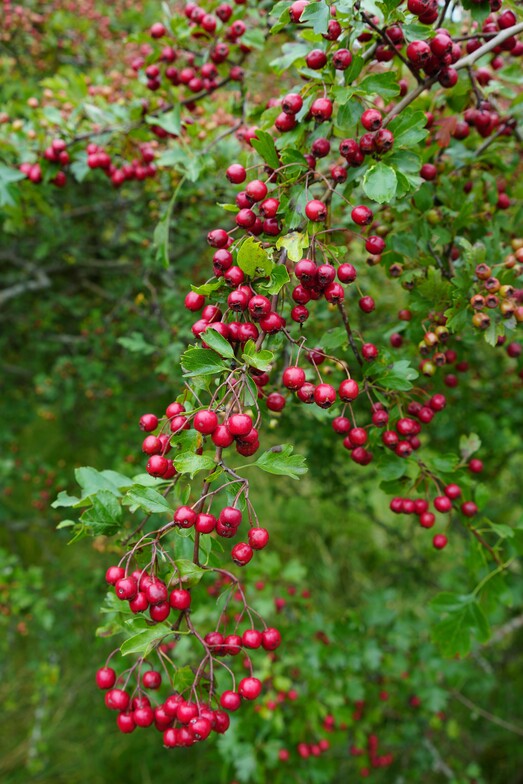
Hawthorn holds an intriguing place where the heart, herbal medicine, and folklore meet. Its flowering branches, protective thorns, and bright red fruits have inspired generations of herbalists—and its uses span emotional ritual, cardiovascular support, and digestive medicine.
A personal connection to hawthorn
When I studied with master herbalist Don Ollsin, he taught us to meditate beneath a hawthorn tree to free ourselves from heartbreak, longing, and yearning.
It is a practice that offers time to sit with what we feel. Beneath the branches, meditation becomes an opportunity to acknowledge loss, notice what we are holding, and make room for change.
Hawthorn belongs to the rose family, Rosaceae, alongside roses, apples, and pears. Like the rose, it pairs delicate blossoms with sharp protection. Its thorns offer a compelling image for the emotional heart: tenderness can coexist with boundaries.
Hawthorn in folklore and magic
In European folklore and folk magic, hawthorn is associated with love, protection, fertility, and the turning of the seasons. Known as the May tree, it has a longstanding connection with spring celebrations and renewal.
In contemporary magical practice, hawthorn is also used in rituals for tending a broken heart—honouring longing, grieving what has ended, and remaining open to love.
Meditating beneath the tree can be approached

Tessa Neilson
Contact Me